[CAPF] Empowering Inclusion: Youth-Led DEI and Psychological Safety in Vietnam’s Ethnic Boarding Schools
![[CAPF] Empowering Inclusion: Youth-Led DEI and Psychological Safety in Vietnam’s Ethnic Boarding Schools](https://mindthegap.vn/wp-content/uploads/2025/07/DAT01376-min-scaled.jpg)
The Chevening Alumni Programme Fund (CAPF) is our way of supporting you to grow the Chevening alumni community into the most engaged, active, and impactful international scholarship alumni network in the world. The CAPF provides funding for Chevening alumni with realistic and achievable ideas to enhance Chevening’s impact around the world.
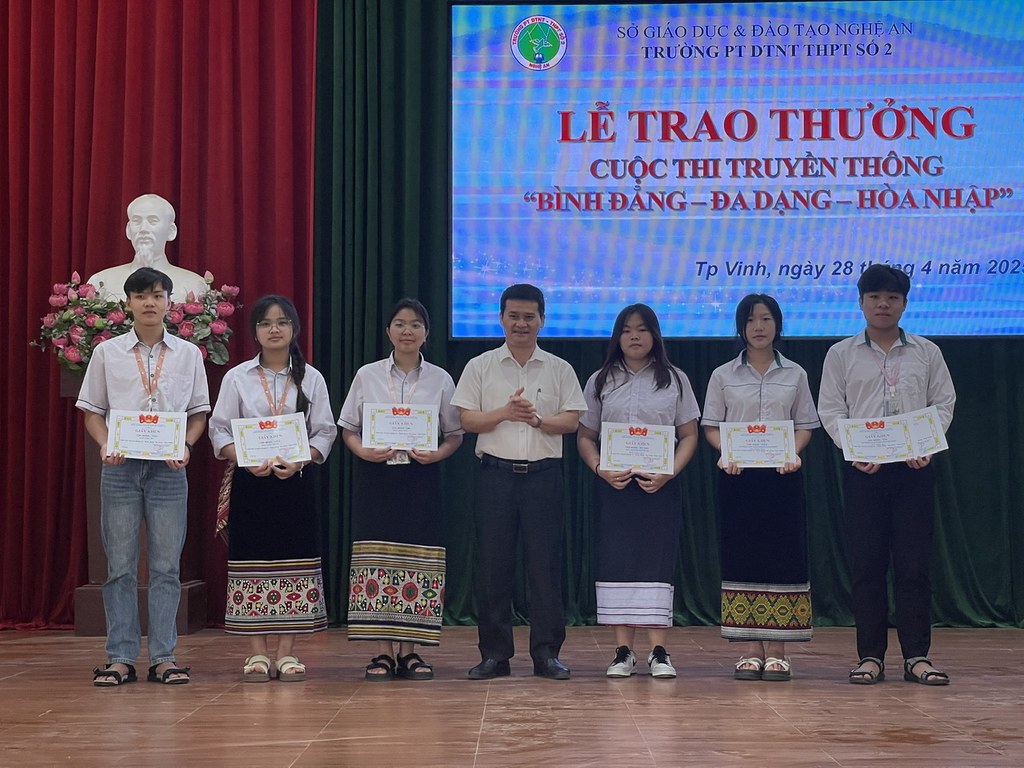
From November 2024 to March 2025, a pioneering initiative was piloted at Nghe An Provincial Ethnic Boarding High School No. 2, a school serving over 700 students from 16 ethnic groups across 12 remote mountainous districts. Funded by the British Embassy Vietnam through the Chevening Alumni Fund Program (CAPF), and implemented by a team of Chevening Alumni (Nguyen Dieu Linh, Chevening Scholar 2022/2023, Ho Hoang Dung Chevening Scholar 2022/2023, Nguyen Phuong Anh Chevening Scholar 2018/2019) with support from volunteers at FPT and FTU Universities, the project introduced a youth-led model to promote DEI and psychological safety in educational settings.

Why DEI Matters in Education
In today’s educational landscape, the importance of diversity, equity, and inclusion (DEI) cannot be overstated – especially for students from ethnic minority backgrounds and underprivileged communities. For these students, education is not just about academic achievement; it’s about feeling seen, heard, and safe. In Vietnam, where ethnic diversity is rich but educational disparities remain, fostering inclusive and psychologically safe learning environments is essential to ensuring that all students can thrive.
Building Student Leadership and Awareness
The project began by establishing a student-led DEI Committee, trained in key concepts such as microaggressions, unconscious bias, discrimination, and psychological safety. This committee became the heart of the initiative, leading school-wide campaigns, organising cultural inclusion activities, and facilitating anti-discrimination workshops. These efforts were not only educational but also deeply empowering, giving students the tools and confidence to become advocates for change within their own school community.

Creating Sustainable Structures for Inclusion
One of the most significant outcomes of the project was the creation of a standardised training curriculum and operational protocols for the DEI Committee. This framework ensures that the initiative can be sustained and scaled beyond the pilot phase. In fact, the school has committed to continuing the program through the end of 2025, integrating the DEI Committee into its existing student union structure. The project also produced a rich collection of student-generated content, including v-logs, factsheets, and reports – that document best practices and lessons learned for future replication.
Measuring Impact: What Changed?
The impact of the initiative was clearly reflected in the endline survey results. Student familiarity with DEI and psychological safety concepts increased dramatically, from 42.9% to 95.2%. Participation in training reached 100%, and students reported a stronger sense of fairness, belonging, and inclusion. For example, the percentage of students who completely agreed they strive to treat others fairly rose from 66.2% to 81.8%, while those who felt a strong sense of classroom belonging increased from 31.8% to 41.2%.

Transforming Behaviour and School Culture
Psychological safety indicators also improved significantly. Students reported feeling more comfortable sharing concerns (rising from 14.3% to 22.3%) and more confident in school authorities’ respectful management of issues (increasing from 14.9% to 25.7%). Perhaps most strikingly, disruptive behaviors such as bullying and offensive comments were eliminated entirely, and respectful communication practices became more common. Teachers, too, began engaging in open discussions about equality, student dignity, and LGBTI+ topics, many for the first time, signaling a broader cultural shift within the school.

Ensuring Sustainability and Scaling Up
To ensure the sustainability of this progress, the alumni team launched “Spark On Social,” a social enterprise dedicated to promoting DEI and psychological safety in education. Through partnerships with organisations like Classroom Circle, FPT University, and FTU University, the initiative is poised to expand its reach and influence. It aligns closely with Sustainable Development Goals (SDG) 4 and 10, as well as Vietnam’s Decree 80/2017/NĐ-CP, which emphasises the creation of safe and healthy educational environments.
Conclusion: Students as Catalysts for Change
This youth-led initiative has proven that when students are empowered as change agents, they can drive meaningful, lasting transformation. By combining training, peer leadership, and institutional integration, the project offers a replicable model for addressing systemic inequities in education. Most importantly, it demonstrates that inclusive, psychologically safe schools are not only possible; they are essential for the future of equitable education in Vietnam.